
Multi-head split systems in Brisbane
One condenser, up to five indoor heads. Brilliant when it's designed properly, and a constant irritation when it isn't.
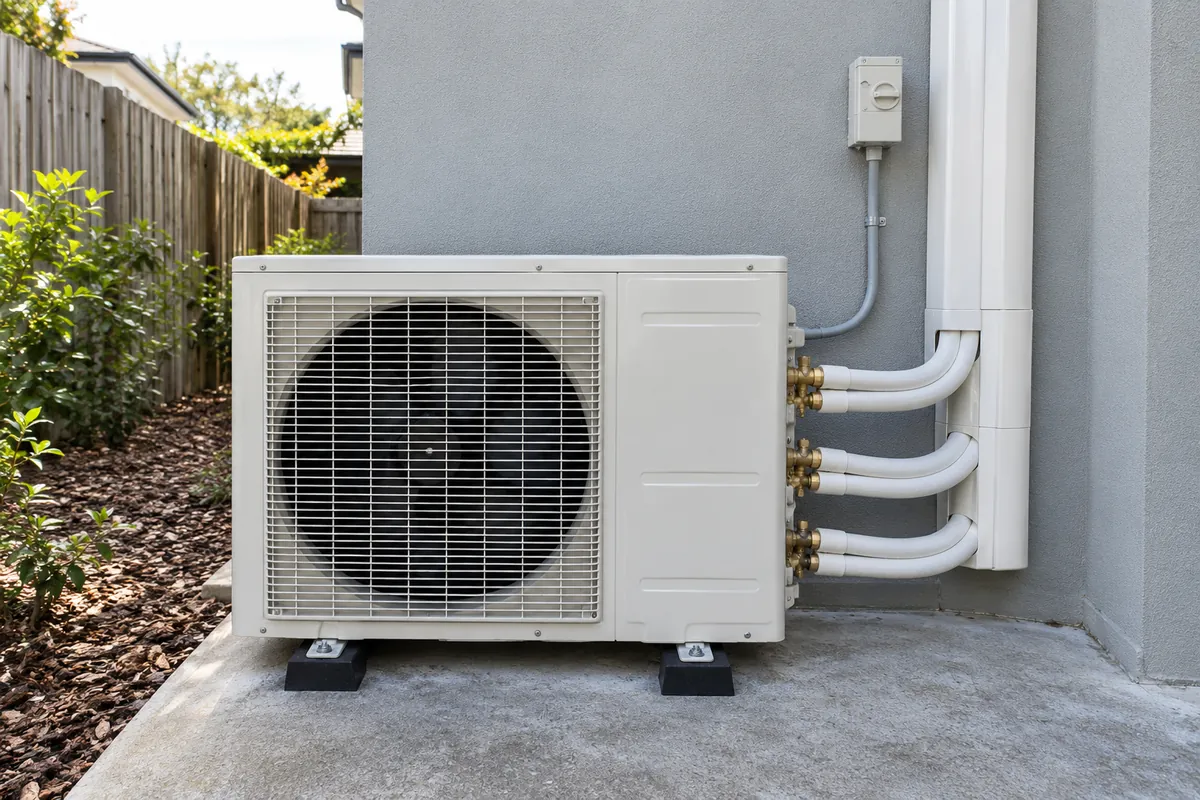
One outdoor unit, several rooms
A multi-head system runs two to five indoor heads from a single outdoor condenser. You get one box on the side of the house instead of four, individual control in each room, and a tidier result, especially on a unit, a townhouse or anywhere the body corporate limits what you can hang on the wall.
The catch is that all those heads share one compressor. When several run at once, each gets less than its rated output, and every head has to run in the same mode. You can't heat the bedroom while cooling the lounge.
That's fine in most homes, because you rarely run every room flat out at the same time. It is not fine if you've been sold a system sized on the assumption that you never will.
What a proper design accounts for
Simultaneous-run derating
The condenser is sized for realistic load, not the sum of the heads. Undersize this and every room underperforms on the hottest day, exactly when you notice.
Pipe run limits
Each brand has a maximum total and per-branch pipe length, and a maximum height difference between indoor and outdoor. Exceeding them voids the warranty and kills performance.
Head type per room
Wall-mounted in bedrooms, but a bulkhead or cassette can make more sense in a living area or a room with no spare wall.
Condenser location
One unit doing the work of four is bigger and louder. It wants airflow, service access, and somewhere that isn't outside a bedroom window or your neighbour's.
One mode at a time
Standard multi-splits are cool-or-heat, not both at once. If you need simultaneous heating and cooling, that's a different class of system and Zac will say so.
Future heads
If you might add a room later, the condenser and pipe routes can allow for it now. Retrofitting a fifth head to a four-head system means a new condenser.
Multi-head, by configuration
Multi-head pricing moves more with pipe routing than with head count, these are starting points, not quotes.
2 heads
Two bedrooms, or a bedroom and a living area.
- One condenser
- Two indoor heads
- Individual room control
- Pipe routing quoted on site
3 heads
The most common configuration in a Brisbane home.
- One condenser
- Three indoor heads
- Individual room control
- Pipe routing quoted on site
4–5 heads
Whole-house, or a townhouse with limited outdoor space.
- One condenser
- Four or five heads
- Load-calculated condenser sizing
- Pipe routing quoted on site
Two or three separate single-head systems are sometimes cheaper and always more robust, if one fails, the others keep running. Zac will tell you which way your house should go.
Multi-head questions
How much does a multi-head split system cost?
Published by configuration above: two heads from $4,200, three from $5,400, four to five from $6,900. Multi-head pricing moves with pipe routing more than with head count, so those are starting points and the quote is firm once Zac has seen the runs.
Is a multi-head cheaper than several single systems?
Not usually on price. It's cheaper on wall space, tidier, and often the only option a body corporate will approve. Separate singles are more resilient and easier to service.
How many rooms can one outdoor unit run?
Commonly up to five heads, depending on brand and total capacity. More than that and you're into light commercial territory.
Can I heat one room and cool another?
Not on a standard multi-split, all heads share a mode. Systems that can do both exist but they're a different product and a different price.
Multi-head or ducted?
Multi-head wins on install disruption, on homes with no ceiling space, and on room-by-room control. Ducted wins on aesthetics and on whole-house comfort. There's a full comparison on this site.
Multi-head or a ducted split?
If you have accessible roof space and what you really want is nothing on the walls, a ducted split does two to four rooms off one ceiling fan coil and Zac fits those too. Choose multi-head if there is no ceiling space, or if you want a different temperature in each room.
Ducted splits →Which brands do multi-head best?
Multi-head is where the differences between brands matter most: maximum pipe length, how far the heads can be apart, and how well the outdoor unit copes when only one head is running. Those limits are published by each manufacturer and they decide what will physically work at your place, so Zac matches the system to the house rather than starting from a badge.
The fifteen brands compared →Can you add a head later?
Only if the condenser was sized and piped for it. Worth deciding before the install, not after.
Get a multi-head designed properly
Tell Zac which rooms, and he'll tell you whether multi-head is the right answer.
Design a multi-head system
List the rooms and their rough sizes. That's enough to start.